Motor Power Guide: What Wattage Do Family Cargo E-Bikes Need
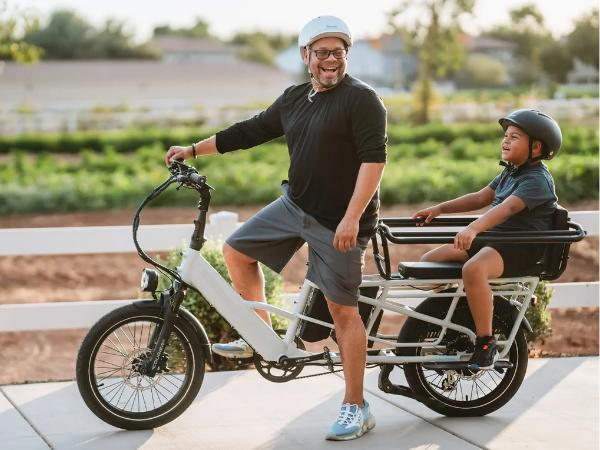
When I bought my first cargo e-bike, I spent about two weeks reading motor specifications online and came away more confused than when I started. Nominal wattage, peak wattage, continuous output, torque ratings, mid-drive versus hub, cadence sensor versus torque sensor. Every article seemed to contradict the previous one about what actually mattered.
Eventually I called a mechanic who had been working on cargo bikes for about eight years. He cut through all of it in about four minutes. What he told me was simpler than anything I had read, and it turned out to be completely accurate once I had a year of real riding behind me.
This is that conversation, plus everything I have learned since.
Why Wattage Alone Tells You Almost Nothing
The wattage number on an e-bike motor is the figure manufacturers lead with because it is easy to compare. A higher number sounds better. But wattage is a measure of power, which is the rate at which work is done. It tells you nothing about whether that power is delivered smoothly, how it performs under sustained heavy load, or whether it is appropriate for the specific demands of family cargo riding.
A 500W motor on a poorly engineered cargo bike will feel worse under load than a 250W motor on a well-engineered one. The wattage number is a starting point for comparison, not a conclusion.
What the mechanic told me was to look at three things together: torque output in newton-meters, motor placement on the frame, and the type of sensor controlling the assist. Get those three right, and the wattage almost takes care of itself.
Torque Is What Actually Moves a Loaded Cargo Bike
Torque is rotational force. It is what physically pushes the bike forward, particularly at low speeds and on inclines. When you are carrying 40 kilograms of children, 15 kilograms of groceries, and your own body weight up a gradient, torque is the number that determines whether the motor feels effortless or labored.
A 250W motor producing 85 newton-meters of torque will climb better and feel more capable under heavy load than a 500W motor producing 50 newton-meters. The higher wattage motor might have a higher top speed on flat ground, but on the hills and heavy starts that define family cargo riding, the torque advantage wins every time.
For family cargo e-bikes carrying real loads, 60 newton-meters should be considered the minimum worth taking seriously. The better family cargo bikes sit in the 75 to 90 newton-meter range, and some high-end models push above that. When comparing bikes, put the torque figure alongside the wattage figure and weight both equally.
Mid-Drive Motors Versus Hub Motors: This Matters More Than Wattage
Motor placement is the second thing the mechanic mentioned, and he was emphatic about it for cargo bikes specifically.
A hub motor sits inside the rear wheel hub. It delivers power directly to the wheel, bypassing the bike’s gearing system entirely. On flat ground with moderate loads, this works fine. Under heavy load on a hill, the hub motor has to work harder in a less mechanically advantageous position, which means more heat generation, faster wear, and a less natural-feeling assist.
A mid-drive motor sits at the bottom bracket, the point where the pedals attach to the frame. It drives the chain, which means it works through the bike’s gearing system. Select a lower gear on a steep hill, and the motor’s effective torque is multiplied by that gear ratio. The same motor that feels adequate in a high gear becomes considerably more powerful in a low gear, exactly when you need it.
For family cargo bikes carrying 100 kilograms or more of combined load on mixed urban terrain, a mid-drive is the correct specification. Hub motors are fine for lighter applications. For this specific use case, mid-drive handles the demands of daily heavy-load riding more gracefully and more durably over time.
One practical exception worth knowing
Hub motors are simpler mechanically and generally cheaper to service. If you live somewhere genuinely flat, never carry loads near the bike’s maximum capacity, and value low maintenance costs over hill-climbing performance, a quality rear hub motor is a defensible choice. For everyone else, mid-drive.
Torque Sensors Versus Cadence Sensors: The Daily Riding Experience
This is the third point from that conversation, and honestly it might be the most important one for daily riding satisfaction.
A cadence sensor detects whether the pedals are turning. When they are, the motor activates. When they stop, the motor cuts. The assist level is essentially on or off with some gradations between preset modes. On a loaded cargo bike this produces a riding experience that many people describe as slightly mechanical and occasionally jerky, particularly at low speeds and during the repeated stop-start cycling of urban riding.
A torque sensor measures how hard you are actually pushing on the pedals and responds proportionally. Push gently and the motor assists gently. Push hard and the motor responds with more force. The result feels completely natural, as if the bike were simply amplifying your own effort rather than switching a motor on and off beneath you.
On a loaded family cargo bike doing a school run with multiple stops and starts, this difference is felt on every single journey. Cadence-sensing bikes feel like you are managing the motor. Torque-sensing bikes feel like you are just riding them.
A quick test during a demo ride: approach a crossing at walking pace and come to a near-stop, then push off again without changing your assist level. On a torque-sensing system the restart feels smooth and natural. On a cadence-sensing system you will often notice a brief delay followed by a surge as the motor catches up with the pedal movement. That surge on a loaded bike in traffic is what you want to avoid on several hundred school runs per year.
What Continuous Versus Peak Wattage Actually Means
Most motor specifications list both a continuous wattage and a peak wattage. The continuous figure is the power the motor sustains indefinitely without overheating. The peak figure is the maximum output available for short bursts, typically a few seconds during hard acceleration or steep climbing.
For legal compliance in most markets, the continuous output is the regulated figure. In Europe and the UK, the limit is 250W continuous. In the United States it varies by state but is typically 750W or 1000W for e-bikes. Bikes sold above their market’s continuous output limit are not road-legal regardless of their peak figures.
When a manufacturer lists a motor as 500W without specifying continuous versus peak, ask the question directly. Some budget motors are rated at 500W peak but 250W continuous, which is a 250W motor by any legal and practical definition. The peak figure matters for occasional hard climbing. The continuous figure determines everyday performance.
How Motor Power Interacts With Battery Capacity
A more powerful motor draws more from the battery under load. A 500W continuous motor climbing a hill with full cargo will deplete a 500Wh battery faster than a 250W motor doing the same climb. This seems obvious, but the interaction is worth understanding when comparing bikes with different motor and battery combinations.
A 250W torque-sensing mid-drive motor paired with a 600Wh battery can deliver more real-world range on a loaded cargo route than a 500W cadence-sensing hub motor with the same battery, because the mid-drive uses its power more efficiently through the gearing, and the torque sensor only draws what the rider actually demands rather than running at a constant level.
This is why the mechanic’s advice to look at the three factors together rather than chasing any single number is the most practically useful framing for motor selection. The Electric Family Cargo Bike Guide covers this interaction in detail alongside battery capacity, modular seating, and the other technical factors that determine how a cargo bike actually performs in daily family use rather than in controlled test conditions.
Bosch, Shimano, Bafang: Does the motor brand matter?
In the quality family cargo bike segment, motor brand does matter, though not always in the way buyers expect.
Bosch and Shimano EP8 systems are the most widely fitted premium mid-drive motors and have excellent reputations for consistency and longevity. They are also the most widely serviced, meaning mechanics who know these systems are available in most cities. For families who plan to ride daily for five years or more, the serviceability advantage is real.
Bafang motors appear at multiple price points and quality levels. At the higher end of their range they are genuinely competitive with Bosch and Shimano. At the lower end they are adequate but less refined. The brand alone is not a reliable quality indicator: the specific model matters.
Proprietary motors from cargo bike manufacturers vary considerably. Some are excellent, specifically engineered for the brand’s bikes with calibration that matches the frame and accessory system. Others are sourced from generic suppliers with limited after-sales support. Check specifically what motor a bike uses and whether parts and service are readily available in your region before committing.
The Right Motor for a Family Cargo Bike in Plain Terms
If you want one paragraph that cuts through everything above: for a family cargo e-bike doing daily school runs and grocery trips in a typical city, you want a mid-drive motor with at least 65 newton-meters of torque, a torque sensor rather than a cadence sensor, and a continuous wattage rating that complies with your local regulations. Battery capacity of 500 Wh minimum, 600Wh or more if your routes are hilly or long.
Everything beyond that is refinement. The base specification above will handle almost any family cargo use case reliably and comfortably. Upgrading from that base gets you smoother performance, better range, or more durability over years of heavy use, all of which matter but none of which compensate for getting the base specification wrong.
Looking at how purpose-built family cargo bikes apply these principles across a complete product range is the most useful way to see what good motor specification looks like in practice. The collection of HOVSCO Family E-Bikes shows how motor choice, frame design, and cargo capacity are engineered together rather than selected independently, which is what makes the difference between a cargo bike that performs well on paper and one that performs well on a loaded Tuesday morning school run in the rain.