Commercial vs Home Energy Storage System
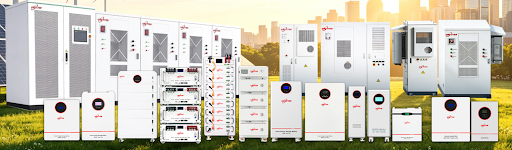
A few years ago, batteries barely came up in conversations about buildings. Now they’re one of the most talked-about upgrades in both residential and commercial construction, and for good reason. Whether it’s a family trying to avoid peak electricity rates or a warehouse trying to dodge crushing demand charges, energy storage has quietly become one of the smartest investments a property owner can make. The technology behind a Commercial Energy Storage System and a Home Energy Storage System is remarkably similar. What differs is scale, purpose, and the specific problems each one solves.
Same Core Idea, Different Stakes
At the most basic level, both systems do the same thing: store electricity when it’s cheap or abundant, and release it when it’s expensive or scarce. That simplicity is deceptive, because the value each one delivers looks quite different depending on where it’s installed.
For a homeowner, a Home Energy Storage System usually means avoiding peak evening rates, getting more value out of rooftop solar, and having reliable backup power during storms or grid outages. The stakes are personal — comfort, safety, and a lower monthly bill.
For a business, a Commercial Energy Storage System operates on a bigger scale and against a different set of financial pressures. Commercial electricity bills often include demand charges based on the single highest spike of usage in a billing cycle, and that spike alone can account for a large chunk of the total cost. Storage systems shave down those spikes, discharging stored energy precisely when demand would otherwise surge. The savings aren’t just nice to have — they can be the difference between a facility running lean or running at a real disadvantage compared to competitors who’ve already made the switch.
Solar Is Better With Storage, Everywhere
One thing homeowners and business owners tend to discover at the same time is that solar panels alone rarely tell the whole story. Panels generate the most power in the middle of the day, which frequently doesn’t line up with when a home or business actually needs it most. Without storage, that surplus either gets sold back to the grid at a low rate or wasted entirely.
Both a Home Energy Storage System and a Commercial Energy Storage System solve this the same way — by capturing that midday surplus and releasing it later, whether that’s a family’s evening routine or a factory’s second shift. In both cases, storage is often what turns a good solar investment into a genuinely excellent one.
Backup Power Means Something Different at Each Scale
Losing power at home is inconvenient. Losing power at a business can be expensive in ways that go well beyond the electricity bill. A restaurant loses inventory. A data center risks catastrophic data loss. A manufacturing line loses hours of productivity that can’t be recovered. This is where the two paths diverge most clearly.
A Home Energy Storage System typically needs to power essential loads — refrigeration, lighting, internet, maybe a well pump — for the duration of a typical outage. A Commercial Energy Storage System, by contrast, often needs to support critical infrastructure at a much larger scale, sometimes indefinitely, sometimes just long enough to safely shut down sensitive equipment or bridge the gap until a generator kicks in. The design goals look different, but the underlying motivation is identical: don’t let a power failure become an operational or personal disaster.
The Financial Conversation Isn’t as Different as It Seems
People often assume commercial storage decisions are purely financial while home storage decisions are more emotional — about peace of mind or environmental values. In practice, the financial logic runs through both.
Homeowners increasingly look at payback periods, incentive programs, and long-term utility savings with the same scrutiny a business would apply to any capital investment. And businesses, despite the spreadsheets and ROI calculations, often cite resilience and risk reduction as reasons that go beyond pure dollars and cents. The Commercial Energy Storage System protects operations the same way the Home Energy Storage System protects a household — both are, at their core, a hedge against uncertainty, just calibrated to different consequences.
Getting the Size Right Matters in Both Cases
Whether it’s a single-family home or a mid-sized commercial facility, one of the most common mistakes is mismatched sizing. Oversized systems waste money on capacity that never gets used. Undersized ones fail exactly when they’re needed most, during the sharpest demand spikes or the longest outages.
A proper energy audit, reviewing actual historical usage rather than rough estimates, is essential in both settings. For homeowners, that might mean a few months of utility bill data. For businesses, it usually means a more detailed load profile analysis, factoring in seasonal variation, equipment cycles, and peak operating hours. The tools differ in complexity, but the underlying principle, size to match real need, holds true across both markets.
Two Markets, One Direction
Costs for both categories of storage have been falling for years, largely riding on manufacturing scale from the broader battery industry, especially electric vehicles. Incentive programs, tax credits, and financing options have made both a Home Energy Storage System and a Commercial Energy Storage System considerably more accessible than they were even five years ago.
Grid dynamics are pushing in the same direction too. As more renewable energy comes online, both homeowners and businesses are being asked, sometimes literally through utility programs, to help smooth out fluctuations in supply and demand. Storage, at any scale, has become part of the answer.
The Bottom Line
Whether the goal is protecting a family through a storm, protecting a factory floor from an unplanned shutdown, or simply getting more value out of solar panels already installed, the logic behind energy storage doesn’t really change — only the scale and the stakes do. A Home Energy Storage System and a Commercial Energy Storage System are, in many ways, the same idea applied at different altitudes: store the power when it’s cheap, and use it when it counts most.
That’s a lesson property owners of every size are learning at roughly the same time, and it’s part of why storage has moved so quickly from a niche curiosity to a mainstream expectation.