Why Cheap EV Extension Cables Are a Thermal Trap: A Technical Guide to 32A vs 40A vs 50A Amperage Matching
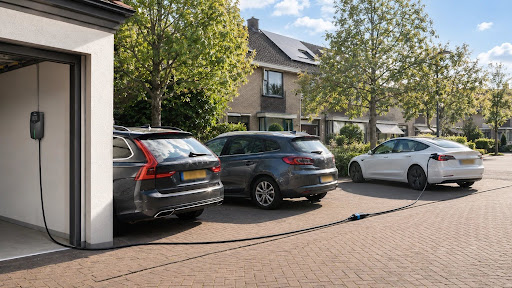
As electric vehicle (EV) adoption reaches unprecedented levels across North America, a silent but high-stakes infrastructure battle is taking place inside residential garages and local RV campsites. For modern owners of high-draw vehicles such as the Tesla Model Y, Tesla Model 3, Rivian R1T, or Ford F-150 Lightning, the home level 2 charger or a workplace mobile connector setup is a critical lifeline. However, structural constraints frequently intervene. Whether a NEMA 14-50 high-power outlet is located on the far opposite side of a two-car garage, or a campsite pedestal sits deep in the brush, owners regularly find themselves a few yards short. To solve this layout gap, many turn to third-party marketplaces, finding a massive price disparity between cheap, ultra-thin white-label extension lines and premium, heavy-duty engineering systems like the premium EVdance product portfolio.
American consumers inherently understand that you get what you pay for. Yet, when faced with an algorithmic marketplace offering a thirty-dollar thin line versus a high-end, heavy-duty solution, the engineering principles underlying that price variance are often hidden behind thick insulation jackets. Cheap manufacturers capitalize on this informational asymmetry, shaving down copper wire metrics, thinning structural layers, and relying on dangerous metallic substitutes. When you hook these flimsy, lower-grade lines up to a sustained heavy electrical draw pulling maximum continuous power for ten consecutive hours, physics catches up. This in-depth technical analysis provides an unrelenting look into the metallurgical differences between generic thin cords and heavy-duty components, exploring why wire gauge and insulation composition dictate safety, and how the rugged EVdance EV extension cable collection sets the global benchmark for safety and continuous performance.
The Metallurgical Mirage: Unmasking Copper-Clad Aluminum (CCA) in White-Label Infrastructure
The single most dangerous compromise hidden inside bargain-basement white-label extension lines is the substitution of premium raw conductors with an inferior metallurgy known as Copper-Clad Aluminum (CCA). Because raw, high-purity copper is an expensive global commodity, unbranded manufacturers seeking maximum profit margins extrude a thin core of lightweight aluminum and flash-plate a microscopic layer of copper over the exterior surface. To an unsuspecting buyer looking closely at the metal terminals, the cord appears to be made entirely of premium solid copper. However, this metallurgical mirage introduces immediate, critical performance failures when managing high continuous loads.
Aluminum possesses roughly 61 percent of the electrical conductivity of high-grade pure copper. To transport the identical continuous amperage of a 32A, 40A, or 50A EV charging session without overheating, an aluminum conductor must be physically much larger in diameter than a copper equivalent. Cheap white-label lines do the exact opposite: they choose thin-gauge profiles while hiding the CCA core beneath artificially thick, cheap PVC coatings. When forced to carry a heavy load, internal resistance spikes instantly. Electrical energy that should be charging your EV’s battery pack is instead converted directly into high heat, transforming the extension line into a hazardous heating element. Choosing a heavy-duty EVdance EV extension cable completely eliminates this danger, ensuring that 100% genuine pure copper manages every volt of your vehicle’s electrical intake.
The Thermal Trap: Fluid Impedance and Automatic Safety Throttling
Many new EV owners do not realize that modern electric vehicles and smart charging stations are equipped with highly sensitive onboard diagnostic systems. As temperature climbs inside an undersized or low-quality wire, the internal electrical resistance of the metal increases exponentially. Under this grueling test, thin cords act as an immediate thermal trap. When a 48A home station attempts to push high current through these subpar lines, the excessive internal resistance within that unbranded cable generates massive heat bleeding backward into the outlet box.
Detecting this dangerous temperature spike via internal diagnostics, your smart charger will instantly trigger a safety mechanism known as Automatic Safety Throttling, cutting your charging speeds entirely in half to prevent an active electrical fire. In worse cases, the sudden resistance spike will trip your home’s main circuit breaker (Breaker) completely, leaving you with an empty battery in the morning. The EVdance Advantage: Precision Thermal Management systematically eliminates these failures. By utilizing heavy-duty, maximum-capacity multi-strand conductors, EVdance cables handle continuous peak current effortlessly, keeping operational temperatures low and ensuring your vehicle charges at maximum speed with zero interruption.
NEC 80% Rule Compliance Check: Under the National Electrical Code, EV charging is classified as a continuous load. The continuous current must never exceed 80% of the cable’s maximum rated capacity.
- 40A Smart Station → Draws 32A continuous → Requires EVdance 40A Cable.
- 48A Premium Charger → Draws 40A continuous → Absolute minimum of EVdance 50A Cable.
| EVdance Cable Rating | Core Wire Gauge (AWG) | Max Continuous Current Allowed (80% Rule) | Best Suited For Home Chargers | Common EV Compatibility |
| EVdance 32A Cable | 10 AWG Pure Copper | 24A Continuous | 16A or 24A Chargers (NEMA 10-30 / 14-30) | Nissan LEAF, older Chevy Volt, Plug-in Hybrids (PHEVs) |
| EVdance 40A Cable | 8 AWG Pure Copper | 32A Continuous | 32A Chargers / NEMA 14-50 Outlets (7.6 kW) | Tesla Model 3/Y (RWD), VW ID.4, Ford Mustang Mach-E |
| EVdance 50A Cable | 6 AWG Pure Copper | 40A Continuous | 40A or 48A Premium Chargers (9.6 kW – 11.5 kW) | Tesla Model Y Long Range/Performance, Ford F-150 Lightning, Rivian R1T |
👉 [Explore the official EVdance EV extension cables collection] (Link: https://www.evdances.com/collections/ev-extesion-cables)
Industrial-Grade Anatomy: The Three Core Moats of EVdance Engineering
To true hardware geeks, industrial designers, and safety-conscious homeowners, a close examination of a product’s internal cross-section reveals its true engineering value. The EVdance EV extension cable layout is built as a highly sophisticated, multi-layered power delivery system designed to isolate, protect, and efficiently transport massive amounts of energy under challenging conditions. The brand’s industry leadership is built directly on three distinct engineering pillars:
- 100% Ultra-Pure Oxygen-Free Pure Copper Core
Deep within each EVdance EV extension cable lies an array of exceptionally dense, full-spec heavy-duty multi-strand pure conductors. By using pure metal completely free of oxide impurities, EVdance lowers electrical resistance to its absolute theoretical minimum. This ultra-conductive core path prevents power loss over long distances, meaning every watt of grid power reaches your vehicle’s battery pack safely while keeping the line cool to the touch. - Precision Thermal Management & TPE Jackets
While bargain cords rely on cheap, rigid PVC that can become stiff or melt under stress, EVdance invests heavily in precision thermal management by utilizing premium Thermo-Plastic Elastomer (TPE) protective jackets. This high-grade synthetic layer serves as a tough defense system. It actively disperses internal heat, blocks extreme ambient summer temperatures, and remains incredibly flexible and easy to handle even when used in freezing winter weather. - Military-Grade Ruggedness for Extreme Use
The environments where extension cords are deployed are rarely gentle. From heavy residential garage floors to rough, unpaved gravel campsites, portable charging lines face constant friction, moisture, and impact. The EVdance EV extension cable features military-grade ruggedness, meticulously engineered to withstand accidental run-overs from heavy electric trucks and heavy SUVs. Its flame-retardant, impact-resistant outer sleeve shrugs off deep mud, pooling water, and continuous direct sunlight with zero structural degradation.
Built to Last: Investing in Certified Infrastructure Safety
When selecting portable charging gear, looking only at the initial price tag overlooks the massive real-world costs of hardware failures. Purchasing an unbranded, under-engineered cord introduces serious risks into your garage, exposing your expensive electric vehicle to electrical hazards, fire risks, and permanent component wear. High-quality equipment should never act as a safety bottleneck or force your vehicle to throttle its charging speeds due to excessive heat build-up.
Every premium component within the EVdance EV extension cable family is precision-engineered to provide total peace of mind. By combining pure, heavy-gauge copper wiring with advanced, weather-resistant outer insulation, EVdance delivers a robust, industrial-grade power link that consistently handles full amperage charging under demanding outdoor conditions. This unwavering commitment to quality ensures that your charging setup stays clean, efficient, and thoroughly protected against electrical faults year after year.
Conclusion: Protect Your EV Investment with EVdance Premium Accessories
The ultimate conclusion for any electric vehicle owner is simple: your vehicle’s charging setup is only as safe as its weakest link. Hooking a sixty-thousand-dollar luxury electric car up to a cheap, thin, uncertified extension cord is a dangerous compromise that risks slow charging performance and severe thermal damage. Choosing a high-purity, heavy-duty connection transforms your everyday charging experience into a safe, effortless process. Protect your vehicle’s delicate electrical system, safeguard your home’s wiring, and upgrade your setup by choosing to [Power Up Intelligently with EVdance’s Premium EV Accessories] (Link: https://evdances.com/) today.