Perfume Capping Machine: A Practical Buying and Operations Guide
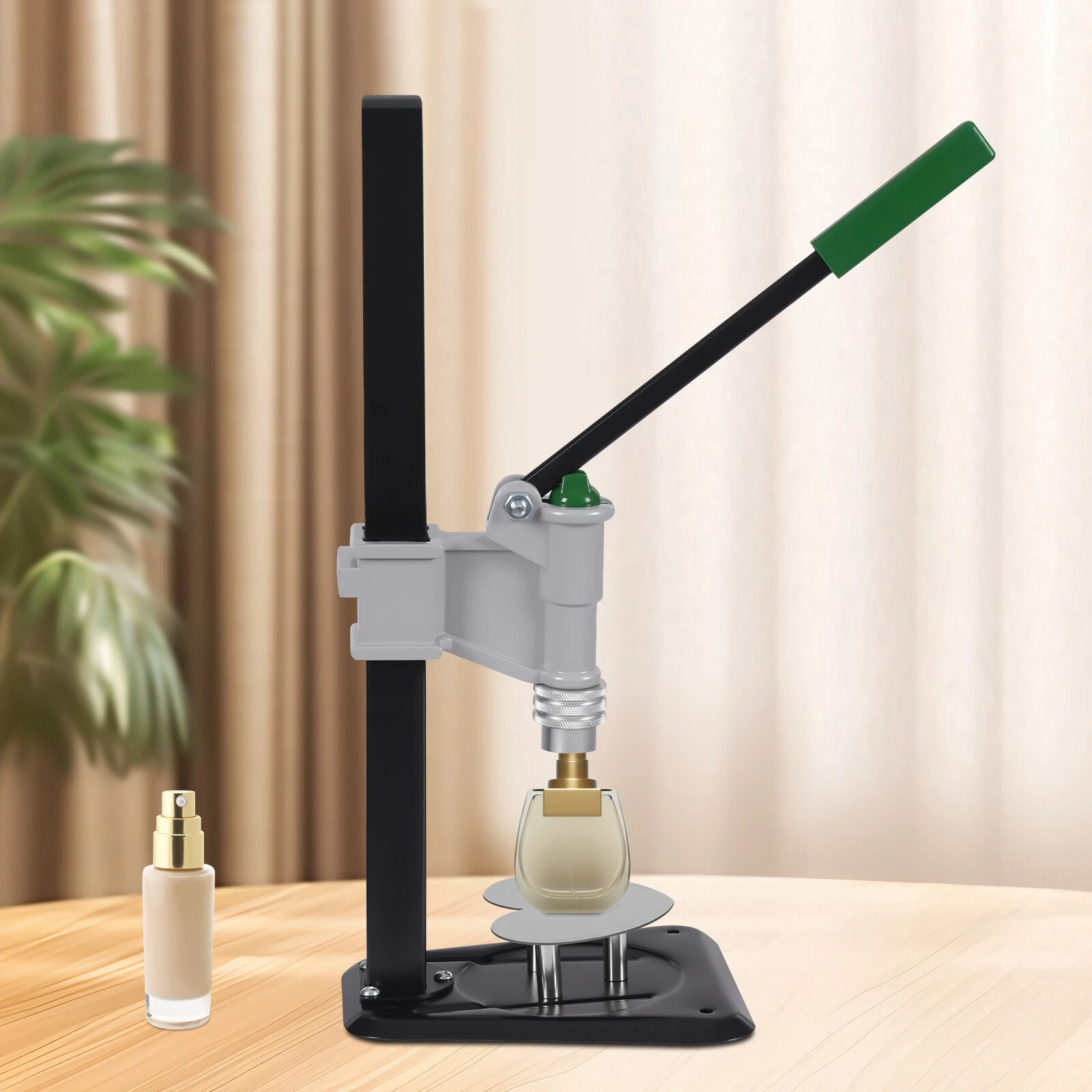
Anyone who’s watched a perfume bottling line in action knows the capping stage is where things either go smoothly or grind to a halt. A perfume capping machine looks simple from the outside — it just puts a cap on a bottle — but the reality involves precise torque control, delicate glass handling, and cap types that range from snap-on closures to ornate screw caps with decorative overshells. Get the machine or the settings wrong, and you end up with leaking bottles, cracked caps, or a line that jams every few minutes.
This guide covers how perfume capping machines actually work, the different types available, what to look for before buying one, and the mistakes that trip up even experienced production teams.
What a Perfume Capping Machine Does
At its core, a perfume capping machine places a cap onto a filled bottle and secures it — either by screwing it down to a set torque, pressing it on with controlled force, or crimping it in place. The goal is a consistent, leak-proof seal without damaging the bottle, the cap, or the fragrance inside.
Perfume packaging is unusually demanding compared to other capping applications for a few reasons:
- Glass bottles are fragile and often irregularly shaped, unlike the uniform plastic bottles used in many other industries.
- Caps are frequently decorative — metal overshells, magnetic caps, or crimped collars — rather than simple screw-on lids.
- Alcohol-based fragrance is volatile, so an imperfect seal leads to evaporation and product loss over the shelf life of the bottle.
- Brand presentation matters. A crooked or scratched cap on a premium fragrance is a quality failure even if the seal itself is fine.
Because of this, perfume capping machines tend to be more precise and more adjustable than general-purpose capping equipment.
Types of Perfume Capping Machines
Manual and Semi-Automatic Cappers
These are handheld or bench-mounted units where an operator places the cap and the machine applies rotation or pressure. They suit small-batch production, artisan perfumers, and businesses testing new packaging before committing to automation. The tradeoff is throughput — a skilled operator might cap a few hundred bottles an hour, which won’t keep pace with larger production runs.
Automatic Rotary Capping Machines
These machines feed bottles through a rotary turret, apply caps automatically, and tighten to a preset torque, often integrated directly into a filling and labeling line. They’re the standard choice for mid-to-large perfume producers because they combine high throughput with consistent torque control across every bottle.
Chuck Cappers
Chuck cappers use a spinning chuck that grips the cap from above and screws it onto the bottle. They handle a wide range of cap sizes and shapes without extensive changeover, which makes them a good fit for brands running multiple SKUs on the same line.
Snap and Press Cappers
For caps that snap or press into place rather than screw on, press cappers apply controlled downward force instead of rotation. This is common for certain atomizer caps and decorative overshells where twisting could damage the finish.
Crimping Machines
Some perfume closures — particularly crimped collars on spray pumps — require a dedicated crimping head rather than a standard capping mechanism. Crimping machines compress a metal collar around the neck of the bottle to lock the pump assembly in place, which is a different mechanical action from torque-based capping.
Key Features to Evaluate Before Buying
Torque Control
Torque consistency is arguably the single most important spec for a perfume capping machine. Too little torque and the cap loosens or leaks during shipping; too much and you crack the cap or the bottle neck, especially with glass. Look for machines with adjustable, repeatable torque settings rather than a single fixed pressure — fragrance lines often run multiple cap types, and each one needs its own torque profile.
Bottle Handling and Changeover Time
Perfume bottles come in an enormous range of shapes, many of them intentionally non-standard for brand differentiation. A machine that requires hours of manual adjustment every time you switch bottle shapes will slow production far more than the capping speed itself suggests. Quick-change tooling or adjustable guide rails matter more than raw speed for brands running varied packaging.
Cap Type Compatibility
Confirm the machine can actually handle your specific cap style — screw caps, snap caps, crimped collars, or magnetic overshells — before purchasing. Some machines are purpose-built for one cap type and can’t be retrofitted easily for another.
Integration With the Existing Line
A standalone capping machine works fine for smaller operations, but if you’re running a full filling-capping-labeling line, compatibility with your existing conveyor speed and bottle infeed matters. Mismatched line speeds create bottlenecks even if the capping machine itself performs well in isolation.
Build Quality and Contact Materials
Fragrance is chemically aggressive toward some materials, and any machine parts that contact the bottle or cap should be built from materials that won’t corrode or react with alcohol-based product residue. Stainless steel contact points are standard for a reason.
Common Mistakes in Perfume Capping Operations
Using one torque setting for every cap type. Different cap materials and sizes need different torque values. Running everything at the same setting is one of the most common causes of inconsistent seals across a product line.
Underestimating bottle variation. Even bottles from the same mold can have slight variations in neck diameter or height. Machines without any tolerance adjustment struggle with this, leading to intermittent jams or under-tightened caps.
Skipping a pre-production trial run. Running a small batch through the machine before a full production run catches torque and alignment issues while they’re cheap to fix, rather than after thousands of bottles have already gone through.
Neglecting maintenance on chuck or gripper components. Capping heads wear down with repeated use, and worn grippers slip rather than gripping cleanly, which shows up as inconsistent torque long before the machine visibly breaks down.
Ignoring cap orientation requirements. Some decorative caps need to be oriented a specific way — a logo facing forward, for example. Machines without orientation feeding can leave a percentage of bottles with misaligned caps, which becomes a manual rework problem downstream.
Matching Machine Type to Production Scale
For a small perfume brand doing a few hundred bottles a month, a semi-automatic capper is usually the right starting point — the capital cost is manageable and the flexibility to adjust settings by hand suits low-volume, high-variation runs. As volume grows into the thousands per day, a rotary automatic capper with programmable torque profiles becomes worth the investment, since manual capping simply can’t keep pace without adding significant labor cost.
Brands running multiple product lines with different cap styles often benefit from chuck cappers specifically, since the changeover flexibility offsets a slightly lower maximum speed compared to single-purpose rotary machines.
Final Thoughts
A perfume capping machine is a small piece of equipment with an outsized effect on product quality. Torque precision, cap compatibility, and changeover flexibility matter more than raw speed for most fragrance producers, since a fast machine that damages bottles or seals inconsistently costs more in rework and returns than it saves in throughput.
Before buying, run your actual bottles and caps through a trial on the machine you’re considering — not a similar bottle, but the exact packaging you’ll be using in production. Torque and grip behavior can vary enough between bottle shapes that a demo with different packaging won’t tell you how the machine will perform on your line.