Automatic Capping Machine Selection: Matching Equipment to Your Product and Volume
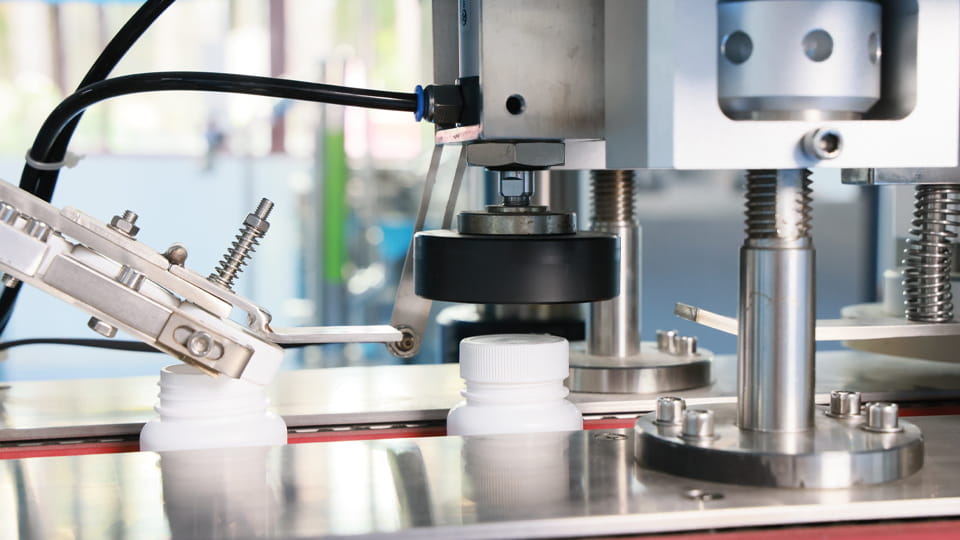
Buying an automatic capping machine without understanding your own product profile first is how a lot of production lines end up with expensive equipment that never quite performs as promised. The machine that works brilliantly for water bottles won’t handle a pharmaceutical vial with a child-resistant cap, and a system built for high-viscosity cosmetic jars looks nothing like one designed for thin glass fragrance bottles. Industry and container type drive the decision far more than most buyers expect going in.
This article works through how to match an automatic capping machine to your specific product, container, and volume — and the practical differences between industries that catalogs rarely spell out clearly.
Why Industry Context Changes Everything
Manufacturers often browse capping machines the way they’d shop for any industrial equipment — comparing speed and price. But the closure type, container material, and regulatory requirements in your industry narrow the field considerably before speed even becomes relevant.
Food and beverage lines typically run high volumes of relatively uniform plastic or glass containers with standard screw caps, prioritizing speed and washdown-compatible construction.
Pharmaceutical packaging often requires child-resistant closures, which need a specific push-and-turn or squeeze-and-turn capping action that standard chuck cappers can’t replicate without specialized tooling.
Cosmetics and personal care frequently involve non-standard jar and tube shapes, varied cap materials, and lower per-SKU volumes with frequent changeovers.
Fragrance and premium spirits deal with fragile glass, decorative caps, and brand presentation requirements where a single scratched cap is a rejected unit regardless of seal quality.
Starting the equipment search with “what does my product actually need” rather than “what’s the fastest machine available” saves a lot of wasted evaluation time.
Matching Capping Action to Closure Type
Standard Screw Caps
The most common closure type, handled by chuck or clutch-driven capping heads that rotate the cap to a preset torque. Straightforward to automate and widely supported across machine brands, which also makes this the most price-competitive category.
Child-Resistant Closures
These require a capping head that replicates the specific motion needed to engage the closure — often a squeeze-and-turn or push-and-turn action rather than simple rotation. Not every automatic capper supports this out of the box, so confirming CRC compatibility early avoids discovering the limitation after purchase.
Snap-Fit and Press Caps
Applied with controlled vertical force rather than rotation. Common in cosmetics and some pharmaceutical packaging where a screw thread isn’t practical. Force and dwell time tuning matter more here than torque specs.
Trigger Sprayers and Pumps
These closures often need to be oriented in a specific rotational position — the trigger or nozzle facing a particular direction — which requires orientation-sensing feed systems, not just standard cap placement.
Crimped and Ferrule Closures
Common in cosmetics and some beverage packaging (particularly sparkling products), crimping requires a dedicated mechanical action distinct from torque-based capping, compressing metal around the container neck rather than engaging threads.
Container Material and Its Effect on Machine Choice
Glass and plastic containers put different demands on an automatic capping machine, and this affects more than just the gripping mechanism.
Glass requires cushioned or adjustable-pressure grippers, precise centering to avoid off-axis force, and often a gentler force ramp-up to avoid chipping or cracking. Machines built primarily for plastic bottling sometimes lack this level of control.
Rigid plastic containers tolerate more aggressive handling and higher-speed operation, making them the most forgiving substrate for automatic capping in general.
Thin-walled or flexible plastic containers, like some squeeze tubes, need force limits low enough to avoid deforming the container itself during capping — a consideration that doesn’t come up with rigid bottles at all.
Volume Thresholds Worth Knowing
There’s no universal cutoff where automatic capping becomes worthwhile, since it depends on local labor costs and equipment pricing, but a few general patterns hold across industries:
- Under a few hundred units a day, semi-automatic capping is usually more cost-effective — the equipment cost of full automation isn’t justified yet.
- Low thousands per day, the decision often comes down to changeover frequency more than raw volume. Frequent SKU switching can make automation less attractive unless the machine has fast tooling changeover.
- High-volume, single-format production is where automatic capping shows the clearest return, since the labor savings compound with every additional shift run.
Rather than relying on a general volume rule, it’s worth calculating the actual break-even point using your specific labor cost, equipment price, and expected changeover frequency — the numbers vary enough between businesses that generic thresholds can mislead as easily as they help.
Evaluating Suppliers and Machines
A few practical checks separate a good purchase decision from a costly one:
- Request a trial with your actual containers and caps, not a similar demo product. Grip behavior, torque requirements, and orientation feeding all depend on the specifics of your packaging.
- Ask about tooling changeover time for every format you currently run or plan to run, not just your primary SKU.
- Confirm regulatory compliance support if you’re in pharmaceuticals or food — some machines are validated for GMP environments and others aren’t.
- Check spare parts lead time and service coverage in your region, since wear components like chucks and clutch springs will eventually need replacement.
- Clarify inspection and rejection capability — whether missing or misaligned caps get caught automatically or require manual inline inspection.
Common Mistakes Across Industries
Choosing a machine based on a competitor’s setup rather than your own product. Two companies in the same industry can have different enough container geometry or cap types that equipment isn’t directly transferable.
Underestimating the cap feeder as the weak link. Regardless of industry, the cap orientation and feeding system tends to cause more downtime than the capping head itself, especially with irregularly shaped caps.
Not planning for future SKU expansion. A machine perfectly tuned for one product but with no flexibility for a second cap type becomes a bottleneck the moment the product line grows.
Treating “automatic” as synonymous with “unattended.” Every automatic capping machine still needs monitoring, hopper refilling, and exception handling — realistic staffing plans should reflect that.
Final Thoughts
The right automatic capping machine depends far more on your container, closure type, and production pattern than on any single spec like top speed. A machine that excels with rigid plastic bottles and standard screw caps may be entirely wrong for fragile glass or child-resistant closures, regardless of how impressive its throughput numbers look on paper.
Before finalizing a purchase, run an actual trial with your specific packaging and get changeover time figures for every format you plan to run — not just the primary one. That’s typically where the real difference between machines shows up, far more than the headline speed rating ever will.