Emergency Boiler Breakdown Advice: Safe Steps, Warning Signs and Repair Guidance
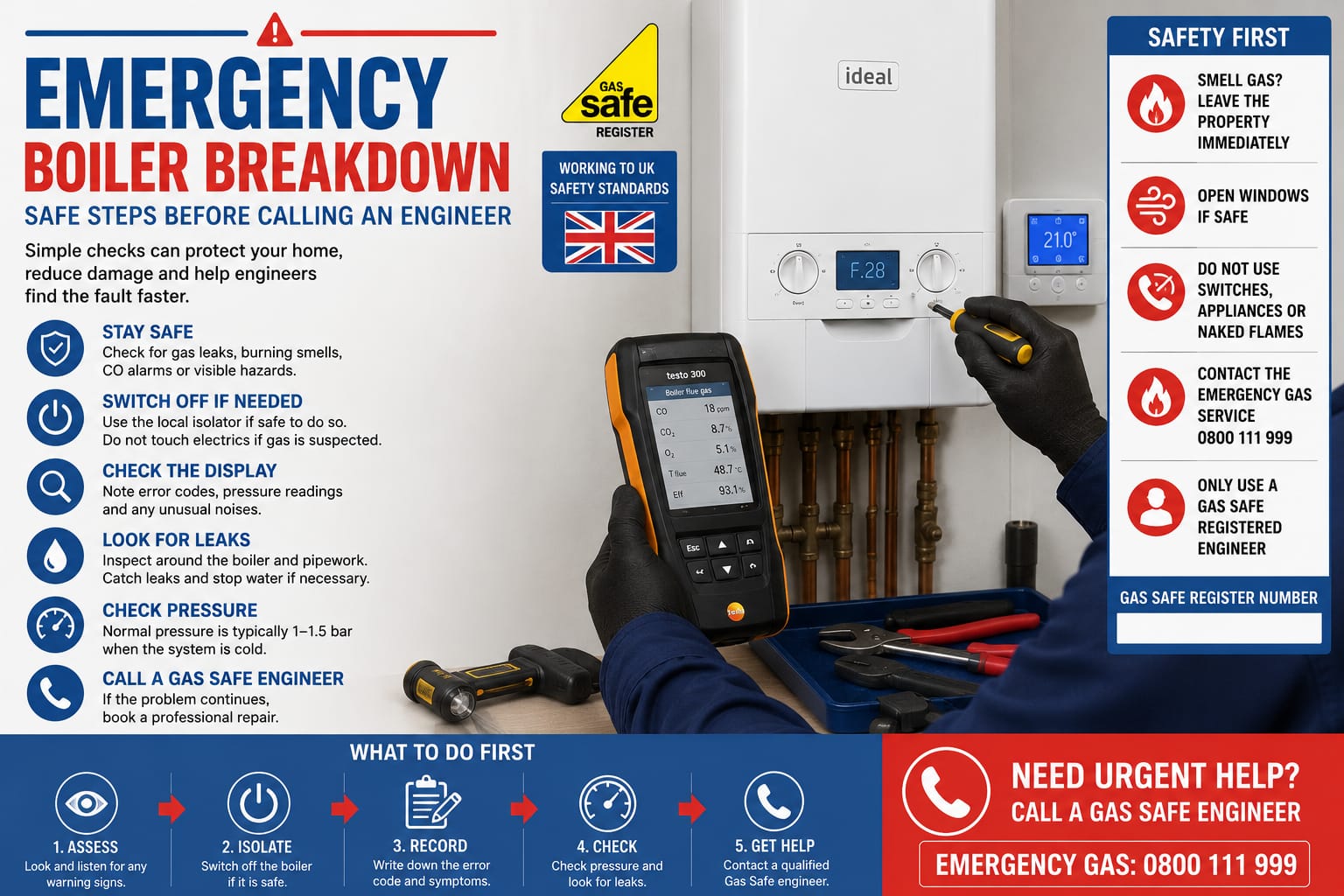
A sudden boiler failure can quickly disrupt a household, especially when the weather is cold and the property depends on reliable heating and hot water. A boiler problem may appear as a complete loss of heat, a pressure warning, an unusual noise, a visible leak or a fault code on the display. Some faults are relatively minor, while others require immediate attention because they involve water, electrics, combustion safety or possible gas-related risks.
The most important first step is not to panic or start dismantling the appliance. A domestic boiler is a sealed heating appliance with pressurised components, electrical controls and, in many cases, a gas connection. Acting safely at the beginning can reduce damage, protect the property and help an engineer diagnose the fault more efficiently.
This guide explains the safest early response for homeowners searching for Emergency Boiler Repairs: What to Do First, while also covering the practical warning signs that show when a boiler fault needs urgent professional attention.
Start With a Safety Check
Before trying any simple checks, look for signs that the situation could be unsafe. A boiler that has stopped working is not always dangerous, but certain symptoms should be treated seriously. If there is a strong smell of gas, a carbon monoxide alarm has activated, water is leaking near electrical fittings, or the boiler is making severe banging noises, the safest response is to stop using the system and seek urgent help.
- Smell of gas or fumes near the appliance
- Carbon monoxide alarm activation
- Burning smells or visible overheating
- Heavy water leakage from the boiler or pipework
- Water close to sockets, switches or wiring
- Repeated lockouts immediately after reset
- Loud banging, vibration or rumbling from the boiler
If a gas leak is suspected, do not operate light switches, electrical appliances or open flames. Leave the property, ventilate only if it is safe to do so, and contact the emergency gas service. For non-gas safety issues, switch the boiler off at the local isolator if it is safe and dry to reach.
Switch the Boiler Off When Necessary
When a boiler is leaking, overheating, making unusual sounds or repeatedly locking out, turning it off can help prevent additional damage. This is particularly important if the system is continuing to attempt ignition or circulation while a fault is present.
Most boilers have a nearby power isolator or fused spur. If there is no suspected gas leak and no water around the switch, turning the appliance off is usually a sensible precaution. Do not remove the boiler cover or attempt internal repairs. Accessing internal components should only be done by a qualified engineer because safety seals, gas valves, heat exchangers and electrical parts may be involved.
Record the Fault Code and Symptoms
Modern boilers often display an error code when they shut down. This code may relate to low pressure, ignition failure, overheating, flame detection, pump circulation, sensor failure or a blocked condensate pipe. Writing the code down before restarting the boiler can be useful because some displays clear after reset.
Useful details to note include whether heating, hot water or both have failed; whether the boiler was making noises; whether the pressure gauge changed suddenly; whether leaks are visible; and whether the issue began during freezing weather. This information can shorten the diagnostic process and reduce unnecessary guesswork.
Do Not Keep Resetting the Boiler
It can be tempting to press the reset button several times, especially when the home has no heating. However, repeated resetting is rarely a solution. A boiler locks out to protect itself or the property from an unsafe or damaging condition. If it shuts down again after one reset, there is likely an underlying issue that needs proper investigation.
Repeated resets can also place additional stress on components such as ignition electrodes, fans, pumps and control boards. One controlled reset may be acceptable if the manual allows it, but repeated lockouts should be treated as a fault, not a nuisance.
Check for Leaks and Water Damage
A leak from a boiler or nearby pipework should be taken seriously, even if the amount of water seems small. Leaks can reduce system pressure, damage flooring and walls, and affect electrical parts if water spreads to unsafe areas.
Leaks may come from pressure relief valves, corroded pipework, pump seals, automatic air vents, internal seals, expansion vessel issues or loose joints. Place towels or a container beneath the leak if it is safe, but avoid touching any electrical parts. If the leak is significant, isolating the water supply may help reduce property damage while waiting for repair.
Understand Low Boiler Pressure
Low pressure is a common reason for combi and sealed system boilers to stop working. Most boilers have a pressure gauge or digital pressure reading. In many systems, cold pressure is commonly around 1 to 1.5 bar, although the correct range should always be checked against the manufacturer’s instructions.
Pressure can drop after radiator bleeding, through small leaks, from a faulty pressure relief valve or because of an expansion vessel problem. If pressure is low and the homeowner understands the filling loop procedure, repressurising may temporarily restore operation. However, if the pressure drops again, the cause has not been solved. Repeated topping up can dilute corrosion inhibitor and may worsen long-term system condition.
No Heating or Hot Water
A total loss of heating and hot water can have several causes. Some are external to the boiler, such as thermostat settings, timer changes, a tripped fuse or a temporary supply interruption. Others involve internal boiler faults, including ignition failure, pump failure, sensor faults, blocked condensate pipes, low pressure or circulation problems.
Before arranging a repair, check that the thermostat is calling for heat, the timer is correctly set, the fuse board has not tripped and other gas appliances are working. If these basic checks do not identify the issue, professional diagnosis is the safest route.
Strange Boiler Noises
A healthy boiler should not produce loud banging, whistling, gurgling or grinding sounds. Noise often indicates that water is not circulating properly, air is trapped in the system, pressure is unstable or limescale has built up inside the heat exchanger.
Banging or rumbling can be linked to kettling, which is more common in hard-water areas. Whistling may suggest restricted flow, trapped air or pressure problems. Gurgling may indicate air in the system or a condensate issue. Any new or worsening noise should be investigated because continued operation can reduce efficiency and damage components.
Frozen Condensate Pipes in Cold Weather
During winter, a frozen condensate pipe is one of the most common causes of a modern condensing boiler shutdown. The condensate pipe carries waste water from the boiler to a drain. If the external section freezes, the boiler may lock out and display a fault code.
Typical signs include gurgling noises, no heating during freezing weather, a visible external plastic pipe and a fault code linked to condensate blockage. Warm water, not boiling water, can sometimes be poured over the pipe to thaw it carefully. If the pipe freezes repeatedly, insulation, repositioning or rerouting may be needed.
When a Repair Becomes Urgent
Not every boiler fault requires an immediate emergency callout, but certain situations should not be delayed. Heavy leaking, complete heating failure in freezing weather, suspected gas issues, carbon monoxide alarms, electrical risk, repeated shutdowns or very high pressure readings should be treated as urgent.
For households that need reliable Plumbers in Fulham, choosing engineers with local heating experience can be especially useful because properties in the area may include modern flats, older terraces and converted buildings with very different pipework and boiler layouts.
Why Early Repair Protects the System
Many major boiler failures begin as smaller warning signs. A slow pressure drop, occasional lockout or unusual sound may seem manageable, but it can indicate stress within the heating system. Ignoring these symptoms often allows damage to spread from one component to another.
Early repair can reduce the risk of full breakdown, water damage, expensive part replacement and unnecessary energy waste. A faulty boiler often works harder to produce the same level of heat, which can increase running costs and shorten the service life of the appliance.
Preventing Future Boiler Emergencies
Good maintenance is the most effective way to reduce unexpected breakdowns. Annual servicing, pressure monitoring, radiator checks, inhibitor protection and early leak repairs can all help keep the system reliable. Homeowners should also keep the boiler area clear, listen for new noises and make sure a working carbon monoxide alarm is fitted where required.
A well-maintained boiler is not only safer; it is usually more efficient and less likely to fail at the worst possible time. Servicing can identify weak seals, combustion issues, poor pressure stability, circulation problems and early signs of corrosion before they become urgent.
After an emergency repair, arranging a professional Boiler Service in Fulham helps confirm that the appliance, controls, pressure, safety devices and wider heating system are working correctly before another fault develops.
Final Thoughts
A boiler emergency should be handled with a calm, safety-first approach. Check for immediate danger, switch the system off if appropriate, record error codes, inspect for visible leaks and avoid internal DIY repairs. Simple external checks may help identify thermostat, timer or frozen pipe issues, but gas, combustion, pressure and internal component faults should be left to qualified professionals.
By acting quickly and safely, homeowners can reduce property damage, restore heating sooner and avoid turning a manageable fault into a more expensive breakdown. A reliable repair should not only restart the boiler but also confirm why the problem occurred and what can be done to prevent it from happening again.