Why Faulty Fire Alarms and Smoke Detectors Create Serious Home Safety Risks
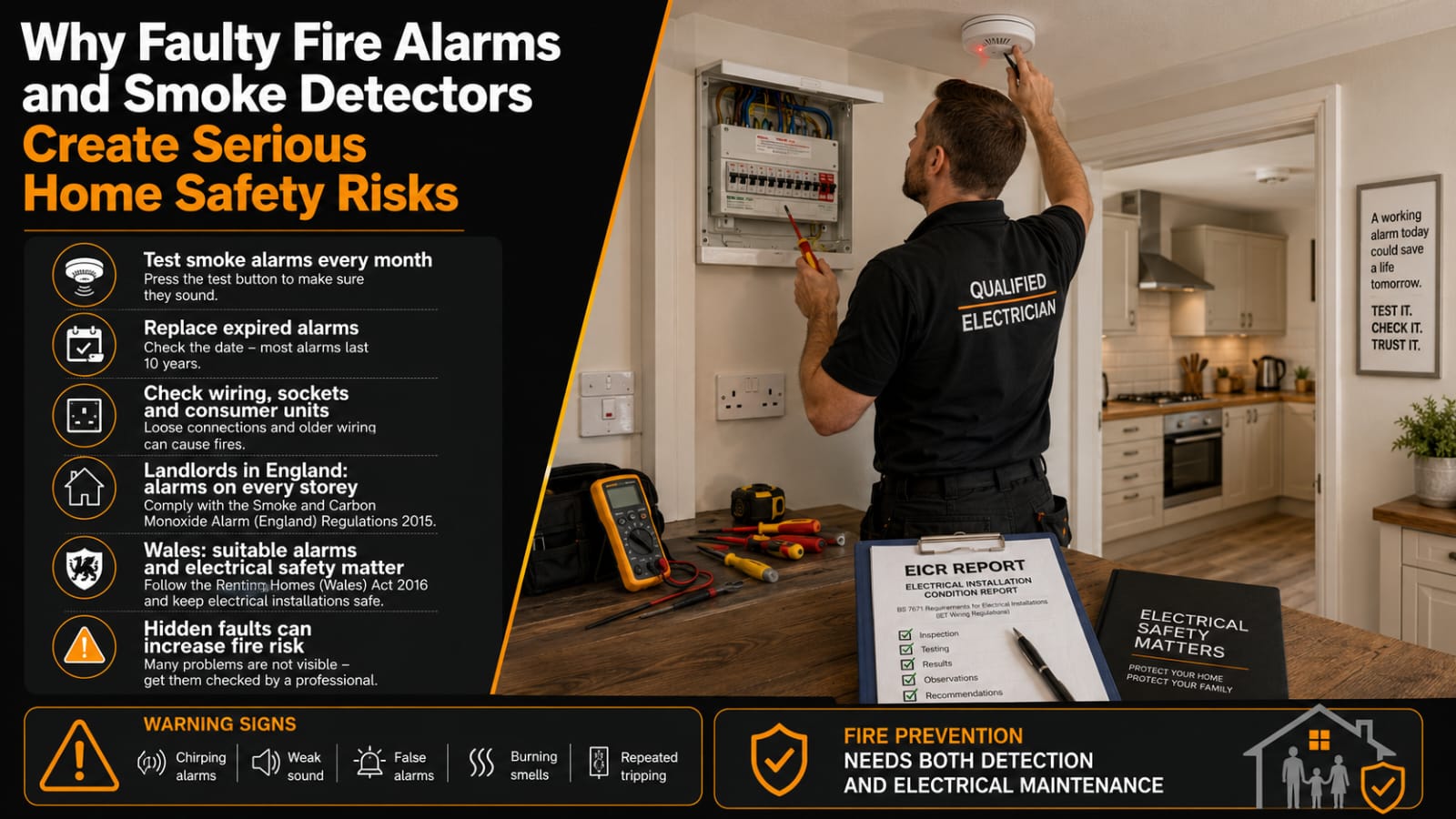
Summary
Smoke alarms and electrical safety systems are often ignored until something goes wrong. This guide explains how alarms fail, why hidden electrical faults can increase fire risk, and how professional inspection and maintenance help protect homes, tenants and families.
A smoke alarm is one of the simplest safety devices in a property, but it is also one of the most important. It may sit quietly on the ceiling for years, yet in a real emergency it can provide the first warning that smoke is spreading through the home. The problem is that many alarms stop working long before homeowners notice. Batteries fail, sensors expire, dust builds up, mains wiring can become defective and some units are disconnected after nuisance beeping and never restored. This is why The Hidden Dangers of Non-Functional Fire Alarms and Smoke Detectors in Your Home should be treated as a serious home safety issue, not a minor maintenance task.
A non-functional alarm cannot wake a sleeping family, warn someone in another room or give occupants time to leave before escape routes fill with smoke. When that risk is combined with ageing wiring, overloaded sockets, damaged accessories or a poorly maintained consumer unit, the consequences can be severe.
In England and Wales, the safety approach is clear: homes should have suitable fire detection, alarms should be tested and maintained, and electrical installations should be kept safe for continued use. The legal duties are strongest for landlords, but owner-occupiers also have a clear practical responsibility to protect their household and property from preventable electrical and fire-related hazards.
Why Working Smoke Alarms Matter
Fire can develop much faster than many people expect. Smoke may spread through staircases, corridors and bedrooms before flames are visible. At night, occupants may not smell smoke quickly enough to react. A working smoke alarm gives an early warning and can make a crucial difference to safe evacuation.
A reliable smoke detector helps alert people while they are sleeping, provides extra escape time, reduces the risk of smoke inhalation and supports a faster emergency response. It also helps protect vulnerable occupants who may need more time to leave the property.
Modern homes place far greater demand on electrical systems than homes of the past. Multiple chargers, laptops, kitchen appliances, tumble dryers, electric heaters, entertainment systems and smart devices can all increase load on circuits. Where the electrical installation is old or poorly maintained, the risk of overheating and faults increases. Smoke alarms do not stop faults from happening, but they provide an essential warning when smoke is produced.
How Smoke Alarms Fail Over Time
Smoke alarms are not lifetime products. Even when an alarm looks clean from the outside, the internal sensor can become less reliable with age. Most alarms have a replacement date or manufacturer guidance on service life, and many should be replaced after around ten years, depending on the model.
Common causes of failure include flat batteries, missing batteries, expired sensors, dust contamination, steam damage, poor positioning, paint covering the vents, loose fittings, damaged mains supply connections and accidental disconnection during decorating or renovation work.
One of the most dangerous habits is removing batteries after false alarms caused by cooking or steam. If an alarm is repeatedly triggered by normal household activity, the correct response is to review its location, type and condition. It should not be disabled and forgotten.
Warning Signs Your Alarm May Be Unsafe
Faulty alarms often show early warning signs. These should not be ignored, especially in older properties, rental homes or houses where the alarm installation date is unknown.
- Regular chirping or unexplained beeping
- No sound when the test button is pressed
- A weak, delayed or distorted alarm sound
- Frequent false alarms
- Flashing fault lights or warning indicators
- Visible discolouration or cracked casing
- Dust, paint or debris around the alarm vents
- A loose ceiling fitting
- An unknown installation or replacement date
A working alarm should produce a clear and strong warning sound during testing. If it does not, it should be cleaned, checked or replaced promptly. If a mains-powered alarm appears faulty, professional electrical assistance should be arranged rather than attempting internal electrical work without competence.
Correct Smoke Alarm Placement
The effectiveness of a smoke alarm depends not only on whether it works, but also where it is installed. Poor placement can cause delayed detection or frequent nuisance alarms.
In many homes, alarms should be considered on every storey, in circulation spaces such as halls and landings, near bedrooms, along escape routes and in areas where fire risk is higher. Smoke alarms should generally be kept away from bathrooms and steam-heavy areas. Kitchens often benefit from heat alarms rather than standard smoke alarms, because cooking fumes can trigger nuisance activations.
Larger properties may benefit from interlinked alarms. When one unit detects smoke, all connected alarms sound together. This can be especially valuable in homes with several floors, long corridors, loft conversions or bedrooms far from the kitchen or living area.
Landlord Duties in England and Wales
Landlord responsibilities must be considered carefully because the rules differ between England and Wales. In England, landlords must ensure that at least one smoke alarm is equipped on every storey used as living accommodation. Carbon monoxide alarms are also required in rooms used as living accommodation that contain a fixed combustion appliance, excluding gas cookers. Landlords must repair or replace alarms once they are informed and the alarm is found to be faulty.
In Wales, rented homes must meet fitness for human habitation requirements. Smoke alarms must be present and in proper working order, and Welsh requirements for rented homes place stronger expectations on suitable alarm provision and electrical safety. Landlords should always check current Welsh Government guidance for managed and rented accommodation.
Owner-occupied homes are not subject to the same landlord duties, but the safety principle remains the same. A property without working detection leaves occupants exposed during the most critical moments of a fire.
Electrical Faults and Fire Risk
Many domestic fire risks start with electrical faults that are not immediately visible. A socket may still work even when the connection behind it is loose. A circuit may continue supplying power while insulation is deteriorating. A consumer unit may look normal while older circuits lack suitable modern protection.
Common electrical fire hazards include damaged wiring, loose terminations, overloaded sockets, poor earthing, missing RCD protection, unsafe extension lead use, faulty appliances, outdated consumer units and DIY electrical work completed without proper inspection or testing.
Warning signs such as burning smells, buzzing sockets, flickering lights, warm plugs, scorch marks, sparks, repeated tripping or partial power loss should always be taken seriously. These symptoms may indicate a developing fault that could worsen if ignored.
Why Older London Properties Need Particular Attention
Many London homes were built long before current electrical demand existed. Victorian terraces, Edwardian houses, older mansion blocks and converted flats often contain installations that have been altered repeatedly over many years. A property may have a modern kitchen or new sockets in one room while older wiring remains elsewhere.
Common concerns in older homes include deteriorating cable insulation, old fuse boards, limited socket provision, undocumented alterations, overloaded circuits, poor bonding, missing RCD protection and fire alarm systems installed in unsuitable locations.
Age alone does not mean a property is unsafe, but older and heavily modified installations should be assessed properly. Visual appearance is not enough to confirm electrical safety.
Professional Inspection and Fault Finding
Professional electrical inspection helps identify risks that ordinary homeowners cannot see. Testing equipment can reveal insulation problems, polarity issues, earthing defects, circuit overloads and damaged wiring hidden behind finished surfaces.
A qualified Electrician in London can check whether the wiring, consumer unit, protective devices, sockets, switches and lighting circuits are suitable for continued use. This is particularly important where a property has repeated tripping, burning smells, old wiring, visible damage or no clear electrical history.
This article is also very useful for homeowners who want to understand how electricians diagnose hidden wiring faults and circuit problems: What Tools Are Used for Electrical Fault Finding? It explains the testing equipment and diagnostic methods used to locate electrical risks safely and accurately.
How an EICR Helps Reduce Fire Risk
An Electrical Installation Condition Report is a formal inspection and test of the fixed electrical installation. It helps determine whether the installation is safe for continued use and whether remedial work is needed. An EICR can identify damaged wiring, poor earthing, overloaded circuits, unsafe consumer units, missing protection and other issues that may increase the risk of fire or electric shock.
For landlords in England, electrical installations in rented homes must be inspected and tested at least every five years by a qualified person. In Wales, landlords must also ensure electrical safety testing is carried out at least every five years unless a shorter period is stated by the report. Homeowners are not usually under the same fixed inspection duty, but an EICR remains valuable when buying, renovating, experiencing faults or living in an older property.
EICR Certificate in London can help property owners understand hidden electrical risks before they develop into more serious problems. It also provides useful evidence for landlords, buyers, homeowners and property managers who need a clearer record of electrical condition.
Smoke Detection and Electrical Maintenance Should Work Together
Smoke alarms provide warning when smoke is already present. Electrical maintenance helps reduce the chance of a fire starting in the first place. The safest approach is to combine both: reliable detection and a well-maintained electrical installation.
A good safety routine should include working smoke alarms, suitable alarm placement, regular testing, timely replacement of expired units, safe consumer units, RCD or RCBO protection where appropriate, properly maintained wiring and professional inspection when warning signs appear.
A smoke alarm cannot make unsafe wiring safe. Safe wiring cannot wake a family if smoke spreads at night. Both prevention and detection are needed to create a safer property.
Practical Maintenance Checklist
- Test smoke alarms every month
- Replace batteries when required
- Never remove batteries permanently
- Keep alarms clean and free from dust
- Replace alarms when they reach the manufacturer replacement date
- Check alarms after decorating or building work
- Review alarm coverage after extensions or layout changes
- Arrange electrical inspection if warning signs appear
- Avoid overloading extension leads and sockets
- Keep records of electrical inspections and remedial work
When to Call an Emergency Electrician
Some warning signs require urgent attention. Homeowners and landlords should not wait if there are signs of heat, smoke, burning, sparking or repeated electrical failure.
Professional help should be arranged urgently if you notice smoke from electrical fittings, burning smells, sparks from sockets, buzzing from the consumer unit, repeated tripping, warm or scorched sockets, water near electrical accessories, partial power loss or failure of mains-powered smoke alarms.
If there is an active fire, spreading smoke or immediate danger, occupants should leave the property and contact emergency services. Electrical equipment should not be investigated while smoke, heat or flames are present.
Common Mistakes to Avoid
Many fire safety issues develop because small warning signs are ignored. The most common mistakes include assuming alarms work without testing them, disabling alarms after false activations, keeping alarms beyond their service life, overusing extension leads, ignoring flickering lights, leaving chargers on soft furnishings, delaying electrical inspections and attempting unsafe DIY repairs.
Fire safety should be proactive. Waiting until an alarm fails or a circuit overheats can place people and property at unnecessary risk.
Final Thoughts
A faulty smoke alarm is not a minor inconvenience. It can remove the first warning a household receives during a fire. When that failure is combined with hidden electrical defects, overloaded circuits or old wiring, the danger becomes significantly greater.
For homeowners in England and Wales, the safest approach is to test alarms regularly, replace them when needed, maintain electrical systems properly and seek professional help when warning signs appear. For landlords, legal duties are stricter and should be checked carefully against the current requirements for England or Wales.
Working smoke alarms, safe wiring, modern protection devices and regular electrical inspection all help protect lives, property and peace of mind. Fire safety is not something to assume. It is something to check, maintain and improve before an emergency happens.