MPO Patch Cable: A Complete Guide
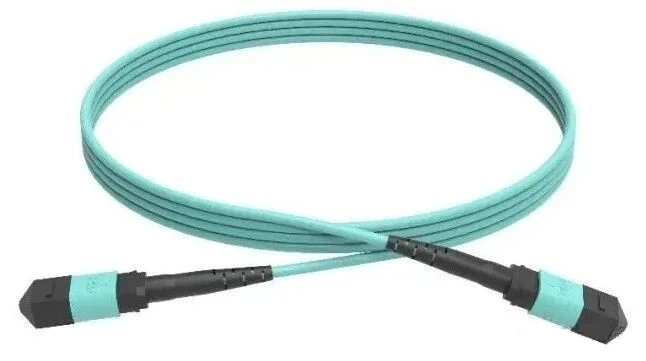
As data centres and network infrastructure continue to scale to meet growing bandwidth demands, the cabling systems supporting them have had to evolve just as quickly. MPO patch cables have become a cornerstone of modern high-density fibre optic networks, offering a way to manage large numbers of fibre connections efficiently without the sprawling complexity of individual cable runs. For network engineers, IT professionals, and data centre managers, understanding how MPO patch cable work and how to select the right ones is essential for building reliable, scalable network infrastructure.
What Is an MPO Patch Cable
MPO stands for Multi-fibre Push-On, referring to a type of connector designed to join multiple optical fibres in a single connection point. Rather than using individual connectors for each fibre strand, an MPO cable bundles multiple fibres, commonly 8, 12, or 24, into one compact connector. This design dramatically reduces the physical space needed for cabling while simplifying installation and management in environments with high fibre density, such as data centres and telecommunications facilities.
MPO cables are often used in conjunction with breakout cassettes or harnesses, which split the multiple fibres within the MPO connector into individual LC or SC connections for connecting to specific equipment.
Why MPO Cables Have Become the Standard for High-Density Networks
Space Efficiency
Traditional fibre cabling, using individual connectors for each strand, can quickly become unwieldy in environments requiring hundreds or thousands of connections. MPO cables consolidate multiple fibres into a single connector, significantly reducing cable bulk and freeing up valuable space within cabinets and racks.
Faster Installation and Reconfiguration
Because MPO connectors handle multiple fibres simultaneously, installation and reconfiguration of network connections can be completed much faster than working with individual fibre connectors one at a time. This is particularly valuable in data centres where downtime for maintenance or upgrades needs to be minimised.
Scalability for Growing Networks
As data demands increase, networks often need to scale up bandwidth capacity. MPO infrastructure is designed with this growth in mind, allowing additional capacity to be added more easily compared to traditional point-to-point fibre cabling, which would require significantly more physical cable runs for the same increase in capacity.
Key Types of MPO Connectors
MPO-8, MPO-12, and MPO-24
The number following “MPO” refers to how many fibres the connector accommodates. MPO-12 connectors are among the most common, offering a practical balance for many network applications, while MPO-24 connectors are increasingly used in higher-density deployments requiring even greater fibre counts within a single connector.
Male and Female Connectors
MPO connectors come in male (with guide pins) and female (without guide pins) variants. Proper pairing of male and female connectors is essential for a secure, functional connection, and mismatched polarity can lead to significant troubleshooting headaches if not addressed during installation planning.
Polarity Types (Method A, B, and C)
MPO cabling systems use different polarity methods to ensure signals are correctly routed from transmit to receive channels across a network. Understanding which polarity method is required for a specific installation, and ensuring consistency across all cables and components in the system, is critical for avoiding connectivity issues.
Single-Mode vs Multi-Mode MPO Cables
Choosing between single-mode and multi-mode MPO cables depends largely on the distance and bandwidth requirements of the network. Multi-mode cables are generally more cost-effective for shorter distances typical within data centres, while single-mode cables support longer transmission distances and higher bandwidth capabilities, making them suitable for connections between buildings or larger campus networks.
What to Consider When Choosing MPO Patch Cables
Fibre Count and Connector Type
Determining the required fibre count, whether 8, 12, or 24 fibres per connector, depends on the specific network architecture and equipment being connected. It’s important to match this to existing infrastructure or plan carefully if building a new system from the ground up.
Cable Length and Routing
MPO cables come in various lengths, and selecting the appropriate length for specific rack configurations helps avoid unnecessary slack or, conversely, cables stretched too tight. Proper planning of cable routing paths within cabinets also helps maintain organised, manageable infrastructure as networks grow.
Polarity Consistency
Ensuring that polarity methods are consistent across all MPO cables and associated hardware within a network is essential for avoiding transmission errors. Mixing polarity types without proper planning is a common source of connectivity problems in MPO-based systems.
Insertion Loss and Performance Ratings
Like any fibre optic component, MPO cables have performance specifications including insertion loss and return loss ratings. Lower insertion loss values generally indicate better performance, which becomes increasingly important in networks running at higher speeds or over longer distances.
Compatibility With Existing Equipment
Before purchasing MPO cables, confirming compatibility with existing switches, patch panels, and breakout modules is essential. Mismatched components can lead to connectivity issues or require additional adapters, adding unnecessary complexity to an installation.
Common Applications
MPO patch cables are widely used in data centres for connecting switches, servers, and storage systems where high fibre density is required. They’re also commonly found in telecommunications infrastructure, particularly for connections requiring high bandwidth capacity across shorter distances. Additionally, MPO cabling supports the growing deployment of high-speed Ethernet standards, such as 40G, 100G, and beyond, which often require multiple fibre pairs bundled together to achieve the necessary bandwidth.
Installation Best Practices
Proper handling of MPO connectors is important, as the multiple fibre alignment within a single connector makes them somewhat more sensitive to dust and debris than standard single-fibre connectors. Using protective caps when cables aren’t in use, cleaning connectors before each connection, and following manufacturer guidelines for handling and bend radius all contribute to maintaining reliable performance over time.
Labelling and documentation are equally important in MPO installations, given the complexity that can arise from managing multiple fibres within bundled connectors across large-scale deployments.
Conclusion
MPO patch cable have become an essential component of modern high-density fibre optic networks, offering space-efficient, scalable solutions for data centres and telecommunications infrastructure. By understanding key factors such as fibre count, polarity methods, and compatibility requirements, network professionals can select the right MPO cabling solution to support both current needs and future network growth. As bandwidth demands continue to rise, MPO technology is likely to remain a foundational element of efficient, high-performance network infrastructure.