Cartoning Machines: A Complete Buyer’s Guide
Packaging plays a critical role in how products reach consumers, and for businesses producing goods at scale, manual cartoning simply isn’t practical or cost-effective. Cartoning machines have become an essential part of modern packaging lines across industries such as pharmaceuticals, food and beverage, cosmetics, and consumer goods, automating the process of forming, filling, and sealing cartons with speed and consistency that manual labour can’t match. For businesses considering an investment in this technology, understanding how cartoning machine work and what factors matter most in selecting the right one can make a significant difference in production efficiency and long-term value.
What Is a Cartoning Machine
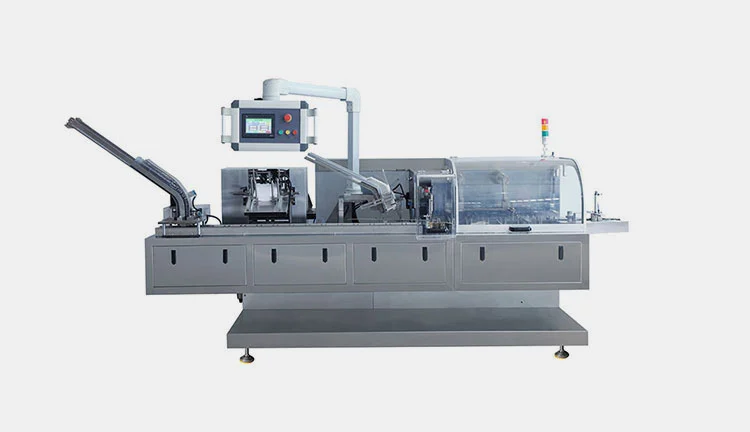
A cartoning machine automates the process of erecting flat carton blanks into their final box shape, inserting products (along with any accompanying inserts, leaflets, or accessories), and sealing the carton closed, all within a continuous, automated workflow. Depending on the design, these machines can handle a wide range of carton sizes and product types, making them adaptable to various packaging needs across different industries.
Cartoning machines are typically categorised as either horizontal or vertical, referring to the orientation in which products are loaded and cartons are formed, with the choice between the two often depending on the specific product type and production line layout.
Horizontal vs Vertical Cartoning Machines
Horizontal Cartoning Machines
Horizontal cartoning machines are commonly used for products that are loaded into cartons from the side, such as boxed food items, cosmetics, or pharmaceutical blister packs. This configuration is well-suited to continuous motion production lines and is often chosen for its ability to handle high-speed operations efficiently.
Vertical Cartoning Machines
Vertical cartoning machines, on the other hand, load products from above, making them particularly suitable for loose or irregularly shaped products that benefit from gravity-assisted loading. This type is often used for items such as pouches, bags, or products that would be difficult to load consistently using a horizontal configuration.
Key Benefits of Automated Cartoning
Increased Production Speed
Automated cartoning machines can process significantly more units per minute compared to manual packaging methods, allowing businesses to scale production without a proportional increase in labour costs. This speed advantage becomes increasingly valuable as production volumes grow.
Consistency and Quality Control
Manual cartoning is prone to human error and inconsistency, whereas automated systems perform the same sequence of actions with precision every time. This consistency helps maintain brand presentation standards and reduces the likelihood of packaging defects reaching customers.
Reduced Labour Costs
While the upfront investment in a cartoning machine is substantial, the long-term reduction in labour costs associated with manual packaging often provides a strong return on investment, particularly for businesses operating at meaningful production volumes.
Improved Workplace Safety
Automating repetitive packaging tasks reduces the physical strain associated with manual cartoning work, potentially lowering the risk of repetitive strain injuries and other workplace safety concerns associated with manual labour-intensive packaging processes.
Industries That Rely on Cartoning Machines
Pharmaceuticals
The pharmaceutical industry has particularly stringent packaging requirements, often involving tamper-evident seals, accurate insertion of patient information leaflets, and strict regulatory compliance. Cartoning machines designed for this sector typically include features supporting serialisation and track-and-trace requirements increasingly mandated by regulatory bodies.
Food and Beverage
Food product packaging often requires cartoning machines capable of handling a variety of carton sizes and materials while maintaining hygiene standards appropriate for food-contact packaging environments.
Cosmetics and Personal Care
Cosmetic products often require precise, aesthetically consistent packaging, making automated cartoning valuable for maintaining brand presentation standards across large production runs.
Consumer Goods
A wide range of consumer products, from electronics to household goods, rely on cartoning machines to package items efficiently while accommodating varying box sizes and product configurations.
Key Features to Consider When Choosing a Cartoning Machine
Production Speed Requirements
Understanding your required output, measured in cartons per minute, is fundamental to selecting a machine capable of meeting production targets without becoming a bottleneck in the overall packaging line.
Carton Size Flexibility
Businesses producing multiple product lines or packaging formats should consider machines offering quick changeover capabilities, allowing for adjustments to different carton sizes without extensive downtime between production runs.
Integration With Existing Production Lines
Cartoning machines need to work seamlessly with upstream and downstream equipment, such as filling machines, labelling systems, and case packers. Evaluating compatibility with existing equipment and factory automation systems is essential for smooth, efficient operation.
Level of Automation
Some cartoning machines offer fully automated operation with minimal human intervention required, while others incorporate semi-automated elements requiring some manual oversight. The appropriate level of automation depends on production volume, budget, and specific operational needs.
Changeover Time and Ease of Use
Machines that allow for quick, straightforward changeovers between different products or carton sizes can significantly reduce downtime, particularly for businesses handling diverse product lines or smaller batch runs alongside larger production cycles.
Maintenance and Long-Term Reliability
Like any complex mechanical equipment, cartoning machines require regular maintenance to ensure consistent performance and longevity. This includes routine inspection of moving parts, calibration of sensors and sealing mechanisms, and timely replacement of worn components. Manufacturers offering strong technical support and readily available spare parts can significantly reduce downtime when maintenance issues do arise.
Cost Considerations
The cost of cartoning machines varies considerably based on production speed, automation level, and customisation requirements. While the upfront investment can be substantial, particularly for high-speed, fully automated systems, businesses should evaluate the total return on investment by considering factors such as labour savings, increased production capacity, and reduced packaging defects over the equipment’s operational lifespan.
Training and Workforce Considerations
Transitioning to automated cartoning requires operators skilled in machine operation, troubleshooting, and routine maintenance. Businesses should factor in training time and costs when planning an investment in cartoning automation, ensuring staff are equipped to manage the equipment effectively and address minor issues without extended production downtime.
Conclusion
Cartoning machine have become an essential component of efficient, scalable packaging operations across numerous industries. By carefully evaluating factors such as production speed requirements, carton size flexibility, and integration capabilities, businesses can select equipment well-suited to their specific packaging needs. As consumer demand and production volumes continue to grow, automated cartoning technology is likely to remain a critical investment for manufacturers seeking to maintain efficient, consistent, and cost-effective packaging processes.